
Website | Compiled by SedNet Secretariat | Subscription Service: SedNet Secretariat | Previous Issues
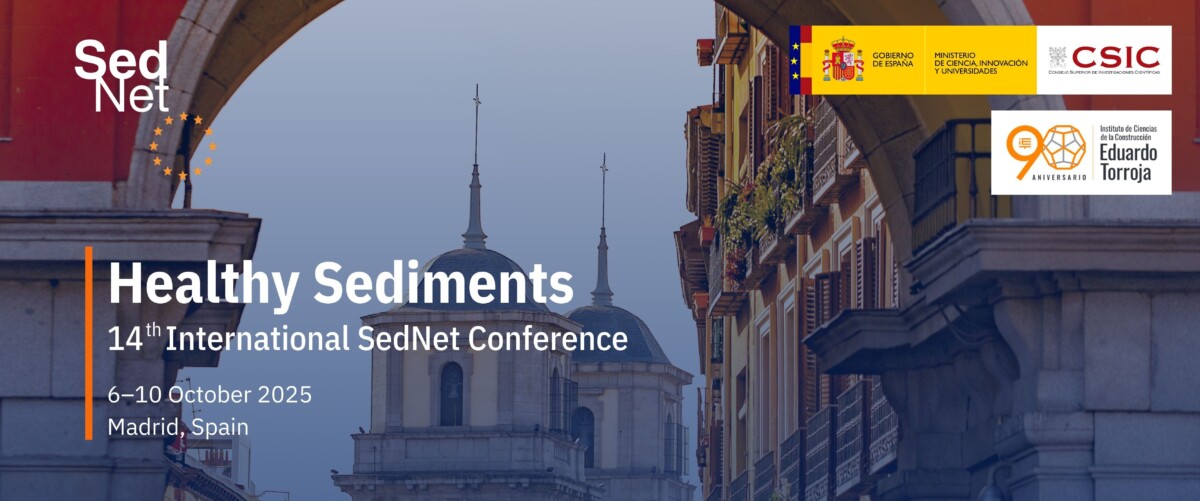
From the 6th until the 10th of October we will organize the 14th International SedNet Conference 2025 in Madrid. The theme of this conference is Healthy Sediments.
Please find below the detailed preliminary conference programme, which outlines the sessions and activities planned for the event. We have put together a diverse and engaging program that covers a wide range of topics related to sediment management. We believe this conference will provide valuable insights and foster fruitful discussions among experts in the field.
Pre-Conference Programme
On the 6th of October we will organize a pre-conference day. During this day the Workgroup Sediments in Circular Economy and the Workgroup Quality will organize workgroup meetings.
The program of the Workgroup Sediments in Circular Economy meeting during the pre-conference day is finalized and exciting. We will cover a lot of topics, including the impact of climate change on sediment projects, an update on the impact of sediments within the Water Framework Directive (explaining what a non-paper is). And discuss a (for SedNet) new topic, the role of microplastics in rivers on the sediment balance.
Also new is the cooperation with the European Committee for Standardization (CEN) and the International Organization for Standardization (ISO) on how to predict or mitigate risks from the application of soils and sediments as function of environmental conditions. Or to put it simple, if field conditions differ from standardised test conditions, can risks (the emission of contaminants) be predicted based on the current leaching tests by using models? A final topic is the name of the workgroup, Sediments in Circular Economy (CE). When we started as workgroup in 2018 CE had a broad scope.
Anno 2025 the definition of CE is more strictly defined, and we realise that we also want to express other values like the social economic value of Building with Nature, stimulate stakeholder engagement and investigate sediment management as a measure for Green House Gas (GHG) reduction. We therefore propose a new name for the workgroup to express these aspects: “SedNet workgroup – Beneficial Use of Sediments”.
To join these discussions, please inform the SedNet secretariat and come to Madrid.
The Quality Working Group will also organize a meeting on the pre-conference day. The full agenda will be shared with you shortly. Please let the SedNet Secretariat know by 7 September if you will be able to attend, and feel free to mention any specific topics or issues you would like to discuss. We will follow up with further details and a finalized agenda as the date approaches, and we look forward to welcoming you there.
The special issue of the Journal of Soils and Sediments “SedNet2025: Healthy Sediments” is now accepting manuscripts from registered participants. To access JSS, please click on the button below.
For questions, please also contact the SedNet Secretariat.
With the SedNet Conference just around the corner, this is the perfect moment to get to know more about SedNet and the people behind it.
In this interview series, we spotlight the network’s mission, impact, and vision for sustainable sediment management across Europe and beyond.
In the first episode, Co-chairs Ilka Carls and Henrich Röper discuss:
– How SedNet is promoting sustainable sediment management and reshaping the narrative,
– The power of a network-based approach,
– The main challenges SedNet addresses, and
– Their vision for the future of sediment policy and practice.
With a background in biology and over 35 years of experience in sediment, Jos Brils brings deep knowledge and a long-term perspective to the challenges and opportunities in sediment management.
In his interview, Jos shares: – The impact of SedNet on the European sediment community.
– Key contributions to European sediment strategies and tools.
– His vision for the future of SedNet and the role of sediments in sustainability.
As co-chair of SedNet’s working group on Sediment Quality, Susanne Heise plays a key role in advancing discussions on sediment management across Europe.
In this video feature, Susanne Heise explores:
– What makes SedNet a unique and valuable network.
– The impact of SedNet’s Working Groups.
– Why experts and professionals should join the SedNet community.
DANUBIUS-RI is the International Centre for Advanced Studies on River-Sea Systems and aims to facilitate excellent science across the continuum from river source to sea, providing a state-of-the-art research infrastructure and integrated knowledge to sustainably manage and protect River-Sea Systems.
On June 25th 2025, DANUBIUS-RI was granted the ERIC status by EC DG R&I. For more information click here. This new legal status strengthens DANUBIUS-RI’s role as a key European hub for integrated research on River-Sea Systems – the interconnected ecosystems of rivers, deltas, estuaries, lagoons, and coastal seas.
Sediment is one of the Strategic Research Priorities for which DANUBIUS-RI will offer state-of-the-art in situ, earth observation, analysis and modelling research facilities. Furthermore, sediment can be studied in the field at the several and diverse DANUBIUS Supersites.
For example, sediment research facilities are offered by the DANUBIUS-NL consortium at the Dutch Rhine-Meuse-Scheldt Delta Supersite. This consortium is carrying out Delta ENIGMA: a 10-year project rewarded by NWO (Dutch Research Council) under their Large Scale Research Infrastructure program. Delta-ENIGMA aims to facilitate cutting-edge research focused on biogeomorphology. It will support the interdisciplinary character of the research field at the interface of geomorphology, hydraulics, ecology, and engineering. Biogeomorphology is all about a better understanding of the interaction between biota and sedimentation, i.e. the formation of delta’s.
The Delta-ENIGMA project forms the basis of the Dutch contribution to DANUBIUS-ERIC. Click here for a video about the DANUBIUS-RI Rhine-Meuse-Scheldt Delta Supersite.
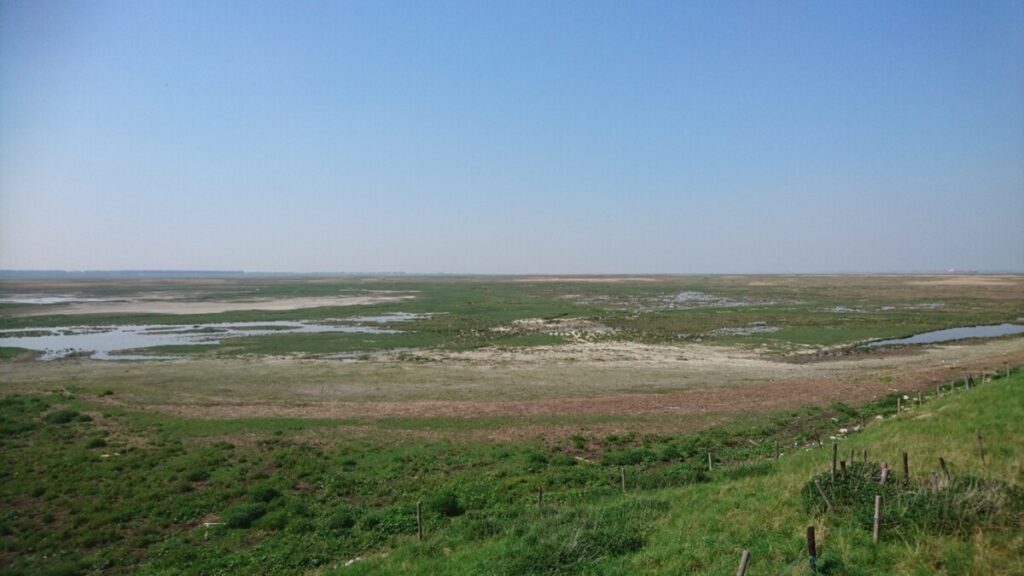
Are you a professional involved in dredging related activities for water infrastructure development and working in government, port authorities, consultancy firms, dredging companies, NGOs, suppliers or ship-builders? Is your ambition to achieve sustainable and resilient water infrastructure or dredging projects that contribute to the UN Sustainable Development Goals? If the answer to either of these questions is “yes” the DFSI (Dredging for Sustainable Infrastructure) Magazine is a must read. Click here to read it.
In 2024, IADC launched a first edition of this magazine. The aim of which is to disseminate and update the content of the book by the same name, published in 2018 together with CEDA. Each issue of DFSI Magazine will take a chapter of the book as its foundation and, along with supporting articles, showcase the DFSI philosophy in practice. With growing environmental awareness and increasing climate pressures, the DFSI Magazine will investigate and explain the latest methods in innovative water infrastructure solutions, showing how a value-added project can be successfully achieved. Pieter de Boer, member of the SedNet steering group is the guest editor of the second edition. Which is out now. Click on the button below to read it.
Copyright © 2026 SedNet, All rights reserved.
Our mailing address is:
SedNet Secretariat
Vasteland 78
3011 BN Rotterdam
The Netherlands