Website | Compiled by SedNet Secretariat | Subscription Service: SedNet Secretariat | Previous Issues
What a nice year we had this year! Highlight was, of course, our conference in Madrid in October addressing “Healthy sediments” as overarching theme. We welcomed Ilka Carls and Henrich Röper as our new chairs. We addressed new topics (literacy, data, AI, sediment flows, and … sediment health). And it was a feast to welcome so many young sediment professionals joining our conference for the first time. This is all very promising for the future. It shows that we jointly build something ‘of value’, which especially feels good and heartwarming in this world of growing negativity. Thank you network! Let’s make our next, 15th (!) international conference in 2027 even a bigger success where SedNet celebrates its 25th (!) anniversary and above all the kick off, of (at least) another 25 years of SedNet.
If you want to read more about the conference and other SedNet achievements in 2025, then please see the “SedNet 2025 progress” presentation which is available here:
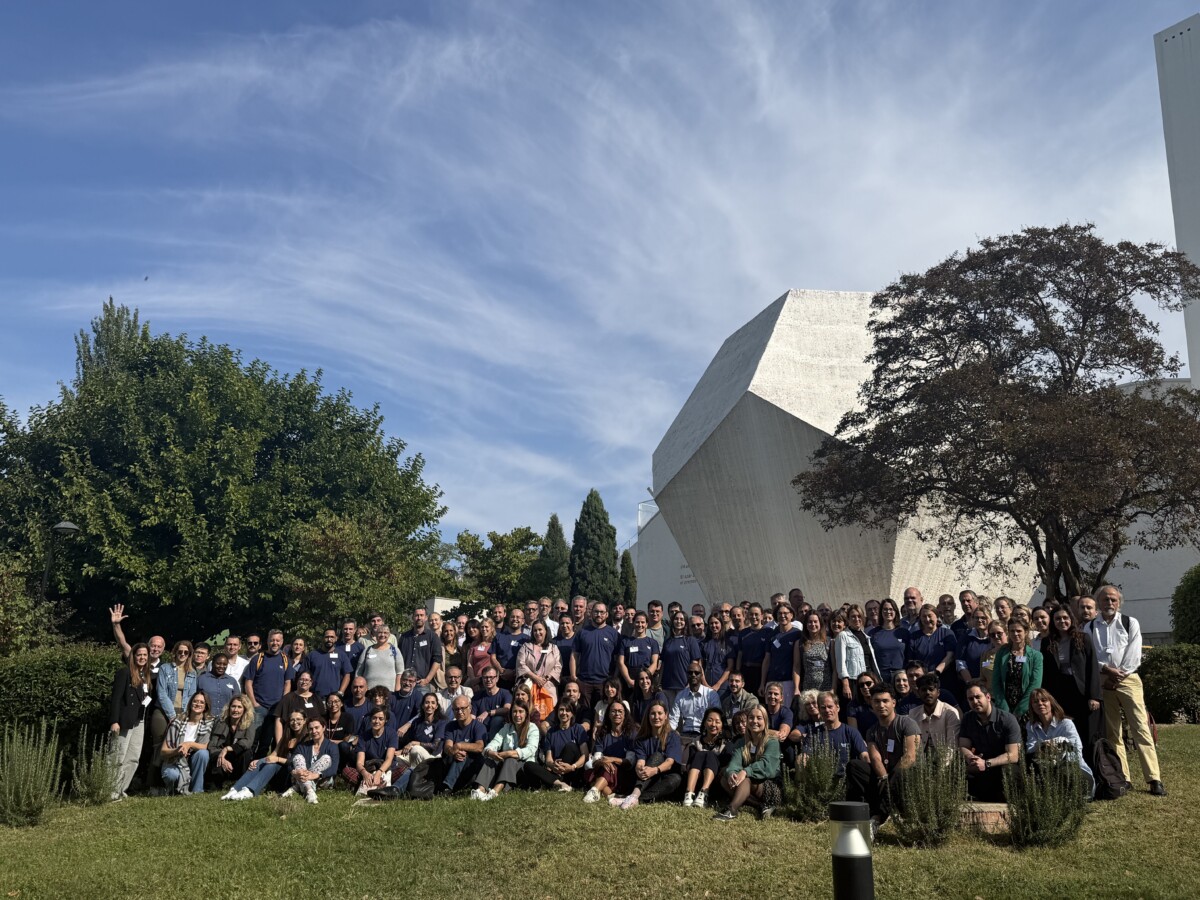
We as SedNet are looking back at a successful SedNet Conference 2025. The conference brought together an inspiring community of scientists, policymakers, and practitioners in Madrid to discuss one of the most vital yet often overlooked topics in environmental management: Healthy Sediments.
The conference began on Monday, 6 October, with a pre-conference day featuring meetings of the Circular Economy and Sediment Quality working groups, followed by an icebreaker event in the evening.
The main conference officially opened on 7 October with three insightful keynote speeches, after which the technical sessions commenced, offering a wide range of engaging presentations. The day concluded with a reception and a poster session, providing the opportunity to meet and interact with the presenters.
On 8 October, the programme continued with additional presentations and concluded with the conference dinner. After another day of interesting and informative sessions on 9 October, the conference came to an end.
Finally, on 10 October, the excursion day took place, including a visit to one of the Tajo River restoration areas and a cultural visit to the Royal Palace of Aranjuez.
A huge thank you to our hosts in Madrid, the SedNet Steering Group, all speakers, and every participant who made this week such a success. Together we turned “Healthy Sediments” into a vibrant exchange of ideas, science, and collaboration!
The presentations are to be found on our website. Please click on the button below.
The special issue of the Journal of Soils and Sediments “SedNet2025: Healthy Sediments” is accepting manuscripts from registered participants. To access the SI, please click on the button below.
During the SedNet Conference 2025, participants had the opportunity to vote for this year’s Best Poster Award a wonderful tradition that highlights the creativity, dedication, and scientific excellence of our sediment community.
The award celebrates outstanding contributions to the sustainable management of sediments bridging science, policy, and practice and showcasing the next generation of ideas shaping Europe’s water and soil systems.
The first place winner receives a ticket to a next SedNet Conference. The first, second and third place winners each get the opportunity to contribute an item to this SedNet E-newsletter. Below you will find their contributions.
This year also marked a significant increase in sediment attention in the Netherlands. Sediment management gets prominent attention in the new, “Room for the River 2.0” program. Here the focus, amongst others, is on riverbed erosion and how to mitigate this by for instance gravel suppletion. Then, at the National Delta congress on 13 November 2025 the Netherlands welcomed a new Delta Vision, where the concept of ‘growing with the sea’ is introduced. This encompasses the idea to let (enabled) natural sedimentation protect us against flooding from sea level rise. Read more about it here.
And also, the Dutch soil professionals community demonstrated increased attention for sediment this year. Their bi-monthly magazine “Bodem” (Soil) has its December 2025 issue completely dedicated to …. sediment!
Why Sediments Matter
Sediments are vital components of rivers, estuaries, and coastal environments, playing a crucial role in the health and balance of aquatic ecosystems. Their natural movement supports biodiversity, water quality, and habitat formation. Maintaining these natural sediment flows is essential to achieving the goals of the Water Framework Directive (WFD) and several other EU environmental policies.
A Growing Challenge
Sediments typically enter rivers through erosion and travel from upland downstream to the sea. However, human activities—such as land-use changes, river regulation, and infrastructure development—alter both the quantity and quality of sediments. These disruptions can create imbalances, leading to ecological degradation and reduced ecosystem services.
In regulated rivers, dams and other barriers trap sediments. Over time, this creates significant environmental and economic challenges, including:
– Soil contamination
– Damage to infrastructure
– Reduced hydropower efficiency
– Lower reservoir storage due to climate change impacts
– Increased irrigation demands
– Sediment shortages downstream, contributing to riverbed erosion
Introducing the SedTrail Project
A multidisciplinary team of Portuguese researchers is addressing these challenges through SedTrail – Tracing Sediments from Source to Reservoirs. By combining field measurements with advanced numerical modelling, SedTrail is developing a new integrated framework to estimate how sediments move from watersheds into reservoirs.
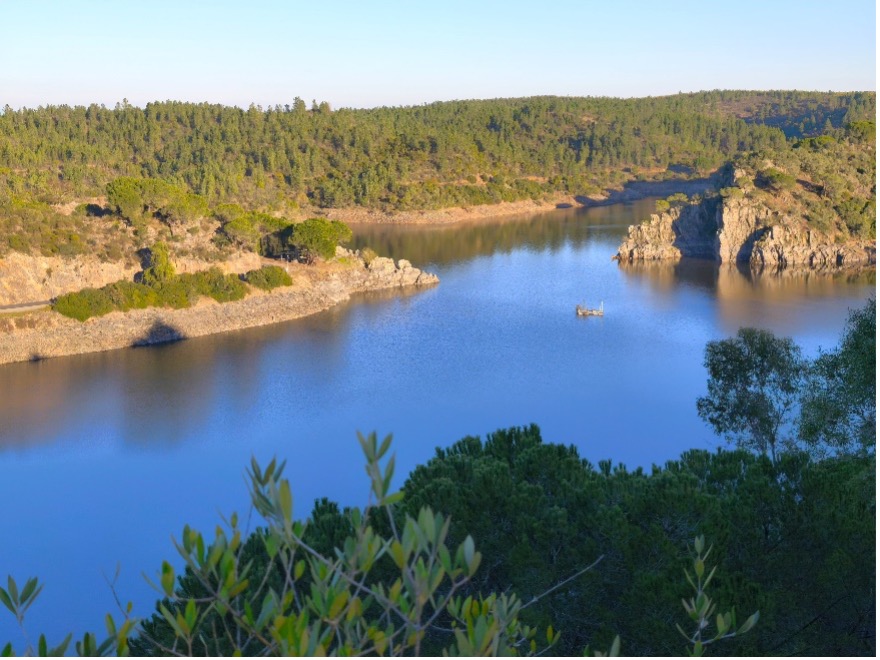
Applied to the Sorraia River basin and the Maranhão reservoir, this approach links watershed processes with reservoir dynamics, providing clearer insight into how land-use practices and climate trends affect sediment flows. The framework also supports the evaluation of future scenarios—such as climate change or land-cover shifts—empowering decision-makers with tools for effective planning and sustainable water management.
Who Benefits?
The primary beneficiaries of SedTrail are water management authorities, including the Portuguese Environment Agency (APA). In the Sorraia Valley, two key organizations—the Association of Irrigators and Beneficiaries of the Sorraia Valley (ARBVS) and the Portuguese National Federation of Irrigators (Fenareg)—are directly involved in the project and responsible for water resource management.
Both ARBVS and Fenareg have formally endorsed the project. Their support highlights the project’s relevance and their commitment to using SedTrail’s tools while facilitating engagement with their members and associated stakeholders.
Looking Ahead
The project began in July 2025, and the official website is currently under development. While we build our online platform, we welcome inquiries, collaborations, and stakeholder engagement.
For more information about SedTrail’s activities, please contact the Principal Investigator, Lígia Pinto.
On the opportunity of the final stage of the European Research project SURICATES (INTERREG NWE, 2018-2024), the project team collaborated on a paper providing an overview of tools, pilot scale testing and on-site monitoring techniques developed and used for promoting the Beneficial use (BU) of dredged sediments within seven INTERREG projects. INTERREG has supported initiatives to change the perception that sediments are a waste. The paper illustrates the lessons learned regarding barriers and enablers for BU of sediments.
BU of sediments implies a combination of factors. The sediment must be suitable for civil works use and be in engineering compliance. The sediment must also need to meet the end of waste criteria, as well as to be in environmental compliance. This needs to be checked in the field where on-site analyses and decision support tools are needed. When BU use is technically possible, there must be a benefit, either in an added socio-economic value or in ecosystem services, compared to Business as Usual (BAU). Stakeholder perception and spatial restraints determine areas for BU of sediments with spatial consensus.
The paper describes this approach on several pilot sites and case studies, examples of different applications of BU of sediments in northwest Europe. The identified tools, equipment, pilot tests and on-site monitoring techniques are useful as BU enablers, for both citizens (an enabler is what is in it for me, while a barrier is like residents opposing to a local proposed development, or the Not In My Back Yard (NIMBY) principle), or regulator constraints (potential risks versus benefits as compared to BAU). On-site tools can also be efficiently used also for stakeholder communication.
The main barriers for beneficial use of sediments are the social acceptance when sediments are used on land (often seen as waste disposal) and the extra direct cost versus the cost for disposal, while indirect benefits such as the potential for nature development, the impact on Gross Domestic Product (GDP) or more locally on the extra jobs created, are generally not considered. Also, the impacts of BAU are often not explicitly considered.
The project partners can provide further information on these tools if they may be applied for new projects.
The ‘Directive (EU) 2025/2360 of the European Parliament and of the Council of 12 November 2025 on soil monitoring and resilience (Soil Monitoring Law)’ was published in the Official Journal of the EU. The Directive entered into force on 16 December 2025.
Please find the link of the Soil Monitoring Law through the button below in EUR-Lex in all official languages of the EU.
On 2 February 2026, Aquatuur and the VITO Water Knowledge Centre will organise a Flemish–Dutch Knowledge Day on wetlands and wet grasslands in Brussels. The event brings together policymakers, researchers and practitioners to exchange knowledge and practical experience on wetlands as nature-based solutions for water management, climate adaptation and biodiversity.
Topics include practical implementation, policy frameworks and cross-border experiences from Flanders and the Netherlands. Please note that the event will be in Dutch.
For more information, click the button below to visit the event webpage.
Copyright © 2026 SedNet, All rights reserved.
Our mailing address is:
SedNet Secretariat
Vasteland 78
3011 BN Rotterdam
The Netherlands